
Contact Us
GF MGD Bldg. Brookside, Cainta, Rizal 1920
+63 936 298 2810
venderitsolutions@gmail.com
Get a Quote
E-commerce vs Traditional Business: Which Wins in 2026?
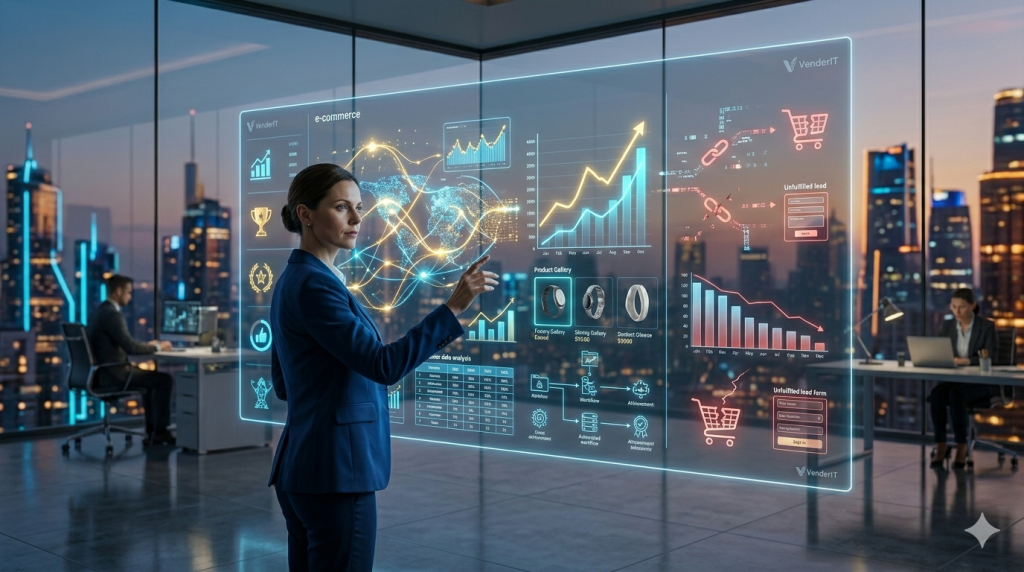
The global marketplace has reached a pivotal turning point where the distinction between digital and physical storefronts is fading. When analyzing ecommerce vs retail, businesses must decide whether to embrace the scalability of the web or remain limited by physical boundaries.
In 2026, consumer behavior has shifted permanently toward digital-first interactions. Consequently, companies that leverage high-performance online platforms are seeing exponential growth compared to those relying solely on traditional foot traffic.
The Core Differences: Ecommerce vs Retail
The primary battleground in the ecommerce vs retail debate is operational efficiency. While traditional business models offer a tactile experience, they carry heavy overhead costs like rent, utilities, and large on-site staffing requirements.
Conversely, e-commerce allows for a leaner operation with a global reach. By removing geographical constraints, a digital storefront remains open 24/7, capturing revenue from time zones that a physical shop could never service effectively.
1. Scalability and Market Reach
A traditional business is limited by its physical location. If you own a shop in a specific city, your revenue is capped by the local population and their willingness to travel to your storefront.
- Global Access: E-commerce platforms allow you to sell to anyone with an internet connection.
- Infinite Shelving: Digital stores can host thousands of SKUs without needing more floor space.
- Niche Targeting: You can find and serve highly specific customer segments that are too scattered for a local shop.
2. Overhead Costs and Profit Margins
One of the most compelling arguments in the ecommerce vs retail comparison is the cost of entry. Traditional retail requires significant upfront capital for a lease, interior design, and inventory displays.
Digital businesses can start with much lower overhead. By automating inventory management and using direct-to-consumer shipping models, e-commerce owners can maintain higher profit margins and reinvest that capital into aggressive marketing and technology.
3. Data-Driven Customer Insights
Traditional retailers often struggle to understand their customers’ journey. They might know what was purchased, but they rarely know why a customer spent ten minutes looking at a product before walking away.
In the digital world, every click is tracked. Specifically, e-commerce allows you to see exactly where users drop off, which images they hover over, and what marketing messages drive the most conversions. This transparency is a massive strategic advantage for growth.
4. Personalization and Customer Loyalty
Modern consumers expect a personalized shopping experience. While a retail clerk can only remember a few regulars, an e-commerce site uses AI to provide tailored recommendations to every single visitor.
As a result, customers feel understood and are more likely to return. Automated loyalty programs and personalized email flows ensure that your brand remains top-of-mind, fostering long-term relationships that drive recurring revenue without manual effort.
5. Inventory Management and Automation
Managing physical stock in a retail environment is a logistical headache prone to human error. However, ecommerce vs retail dynamics change when you integrate automated business tools.
Smart inventory systems sync in real-time across all sales channels. This prevents overselling and automates the reordering process. Therefore, your business remains agile and responsive to market trends without needing a large backroom staff.
6. The Rise of “Phygital” Experiences
Interestingly, the winner of the 2026 market isn’t always purely digital. Many successful brands are adopting a “phygital” approach, using their website as the primary engine for lead generation and sales, with physical showrooms for brand experience.
This hybrid model allows you to maintain the trust of a physical presence while enjoying the efficiency of digital operations. Because your website handles the heavy lifting of transactions and data, your physical locations can focus entirely on high-touch customer service.
7. Overcoming the Limitations of Physical Retail
Traditional business is often at the mercy of external factors like local weather, traffic patterns, and economic shifts in a specific neighborhood. A digital storefront is resilient against these local disruptions.
Specifically, during times of restricted movement or local economic downturns, an e-commerce presence ensures that your revenue stream remains diversified. This stability is vital for long-term business health and investor confidence.
8. Security and Trust in the Digital Era
As digital transactions become the norm, cybersecurity has become a cornerstone of business success. High-quality e-commerce sites invest in encrypted payment gateways and robust data protection to win over skeptical shoppers.
By providing a secure environment, you remove the last remaining barriers for traditional shoppers. Therefore, your digital platform becomes just as “safe” as a physical store, but with the added convenience of home delivery and instant price comparisons.
Conclusion: Adapting for the Future
In the contest of ecommerce vs retail, the digital model offers undeniable advantages in terms of cost, reach, and intelligence. However, the true winner is the business owner who understands how to use technology to enhance the human connection.
Whether you are moving a traditional business online or starting a new digital venture, the goal is the same: to create a frictionless experience that solves your customer’s problems. The technology you choose today will determine your market share tomorrow.
Ready to transform your digital presence into a revenue machine? Contact VenderIT today to build a website that drives real business results.
Ready to build your professional website?
Contact VenderIT today to start your digital transformation.Get Started Now