VENDERIT
Get a Quote

Business Systems

Take delivery orders on your own food delivery system, not somebody else's app

The order, the customer's number and the margin all stay with your restaurant.

Food delivery system development in the Philippines usually starts with the same complaint: the delivery apps bring orders, then take a cut of every one and keep the customer.

Dispatch · live

An animated dispatch map: a courier travels a drawn route from a store in Pasig to a customer in Cainta while a tracker advances from Placed to Picked up, On the way and Delivered.

Customers see exactly where their order is, so your phone stops ringing.

Commission taken by us on any order you deliver
0%

Commission taken by us on any order you deliver

Customer list, order history and repeat data
Yours

Customer list, order history and repeat data

Pro build with a branded Android ordering app
10 days

Pro build with a branded Android ordering app

Lifetime 24/7 AI assistant answering order questions
Free

Lifetime 24/7 AI assistant answering order questions

What it does

01

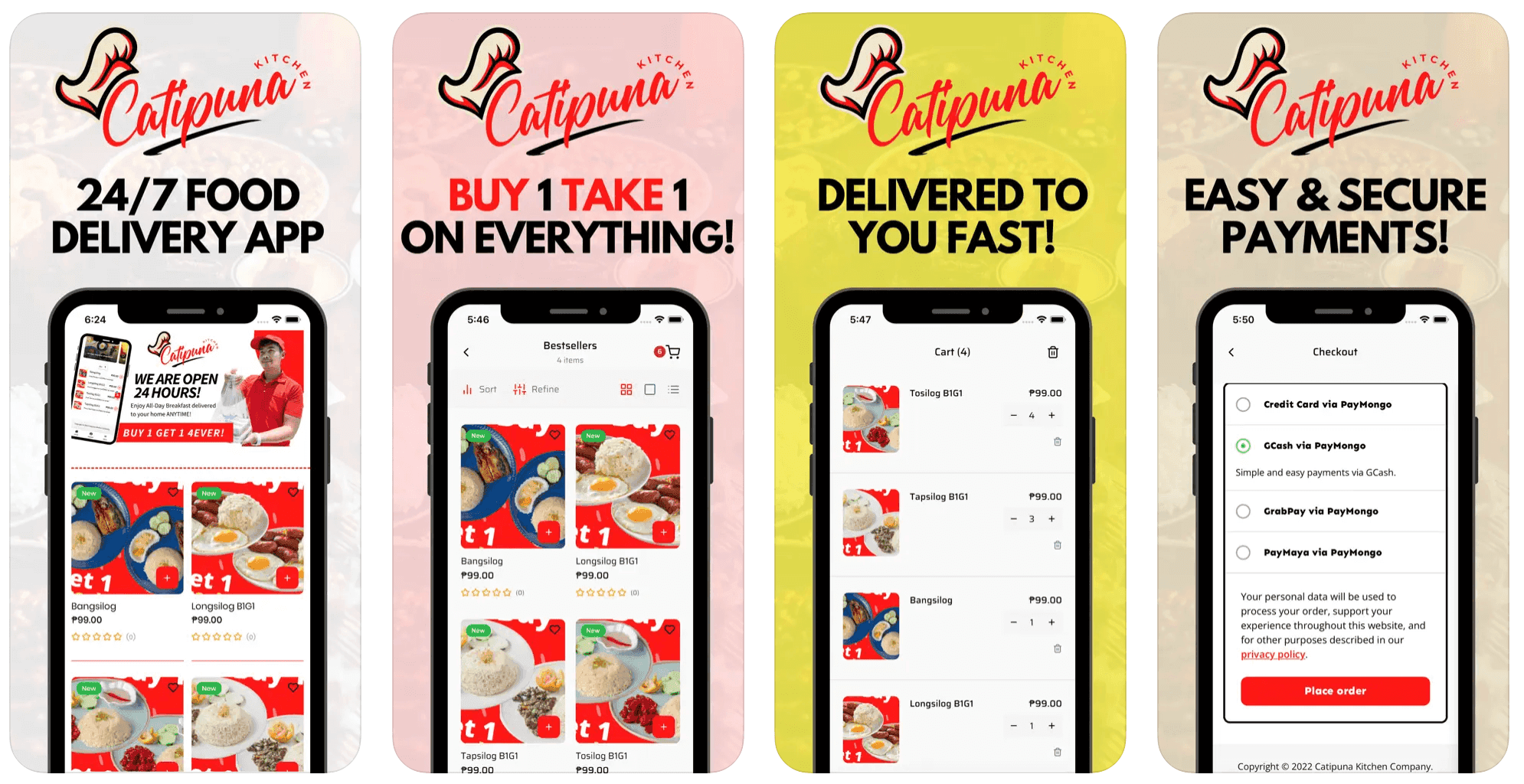
Ordering on your own site and app

Your full menu with photos, sizes, add-ons, group orders and scheduled orders for later today or tomorrow. Customers reorder their usual in two taps because their history is saved, and there is no marketplace listing your competitor beside you at checkout.

02

Delivery zones and fees you control

Draw your zones on a map — barangay by barangay if that is how you think about it — and set a fee, a minimum order and a delivery time per zone. Addresses outside the line are told so before the customer builds a basket, not after they have paid.

03

Kitchen queue with real prep timing

Orders arrive at the station that cooks them with modifiers and notes attached. Scheduled orders drop into the queue at the right moment rather than the moment they were placed, so a 7pm order does not go out at 4pm and travel cold.

04

Rider dispatch and live tracking

Assign your own riders from a dispatch board, or book a third-party courier when your riders are out. The customer follows a tracking link instead of calling the store, and the rider marks handover with a photo or a name at the door.

05

Payments the way Filipinos actually pay

GCash, Maya, card and cash on delivery on the same checkout. COD amounts collected are recorded per rider and reconciled at end of shift, so remittance is a report rather than an argument at the counter.

06

Repeat customers and offers

Accounts, saved addresses, favourites and points that make the second order easier than the first. Send an offer to everyone who ordered adobo in the last 60 days and has not been back — something a third-party app will never let you do.

07

Reports that tell you which zone is worth it

Average order value, orders by hour and by zone, delivery cost against basket size, repeat rate, top items and cancellations with reasons. Enough to decide whether that far barangay should carry a higher minimum or drop off the map.

Connects with

  • GCash and Maya
  • PayMongo and Xendit card payments
  • Google Maps for addresses and zones
  • Lalamove and Borzo courier booking
  • Meta Messenger Platform
  • Semaphore SMS order updates
  • VenderIT POS, loyalty and inventory modules

Built for real businesses

Pricing

Food delivery systems from ₱99,000 — hosting, domain and support included for a year

Starter ₱99,000 covers ordering on your own site with zones, fees and payments, live in 5 working days. Pro ₱149,000 adds a branded Android app your regulars install and reorder from in 10 days. Business ₱199,000 covers multiple branches, a rider app with dispatch and tracking, and courier booking in 15 days. 50% down, the balance against milestones. Hosting is free for year one, then ₱499 a month. We never take a percentage of your orders.

See what's included

Industries using this

Questions

Answers before you ask

Ask us directly

For most restaurants it should not, at least not at first. The apps are how strangers discover you; your own system is how regulars order. The realistic move is to keep the apps for discovery, then give every customer a reason to order direct next time — a card in the bag, points that only work on your app, a price that is a little better. Your margin improves on the orders you win back.

Either way works. If you have riders, they get a dispatch board and a mobile view with the drop list, the tracking link and handover capture. If you do not, the system books a third-party courier per order and passes the tracking through to the customer. Many restaurants run both: own riders for nearby zones, a booked courier for the far ones and for peak hours.

Delivery zones are drawn on a map, not typed as a list of barangays. When a customer pins an address outside your coverage the checkout says so immediately and offers pickup instead, before a basket is built or a payment is taken. Each zone carries its own fee, minimum order and estimated delivery time, so the far areas can be served at a price that is worth serving.

This is the cash-on-delivery problem that actually costs a kitchen money, because the food is cooked and paid for in ingredients before anyone discovers the address is empty. A first order from an unknown number can be held behind a verified mobile number, a small prepaid amount, or a call-back before the ticket ever reaches the station. Numbers that have already refused a delivery are flagged, and you decide what happens next time — prepaid only, or no order at all. Rider remittance and the end-of-shift reconciliation behind it belong to the delivery management system.

A mobile-first website covers most restaurants and is what the ₱99,000 Starter build gives you — no install, works from a Messenger link. An app earns its place once you have regulars ordering weekly, because the icon on the home screen and the push notification are worth more than a bookmark. That is the ₱149,000 Pro package with a branded Android app.

On a tablet or a printer at the station that cooks them, with modifiers, allergy notes and the delivery time attached. Scheduled orders appear when they should be cooked, not when they were placed. Order status moves from received to preparing to out for delivery, and the customer sees the same status on their tracking link without calling the store.

You do — names, numbers, addresses, order history, all of it, exportable at any time. This is the practical reason to build your own system. On an aggregator the customer belongs to the platform and you cannot message them; on your own system you can send an offer to everyone in a barangay who has not ordered in two months.

Related

Want this built for your business?

We shape it around how you actually work, then launch it with training and a year of support.