VENDERIT
Get a Quote

Marketplace Platforms

Grocery delivery app development that holds up on a busy Saturday in Metro Manila

Orders that arrive complete, on the slot promised, with the substitutions the customer actually agreed to.

Grocery delivery app development in the Philippines fails for one unglamorous reason: the picker.

Dispatch · live

An animated dispatch map: a courier travels a drawn route from a store in Pasig to a customer in Cainta while a tracker advances from Placed to Picked up, On the way and Delivered.

Customers see exactly where their order is, so your phone stops ringing.

Business package — the usual grocery platform starting point
₱199K

Business package — the usual grocery platform starting point

Shopper, picker and rider, on one backend
3 apps

Shopper, picker and rider, on one backend

Projects delivered
500+

Projects delivered

Lifetime 24/7 AI assistant handling order questions
Free

Lifetime 24/7 AI assistant handling order questions

Who it serves

01

The shopper experience

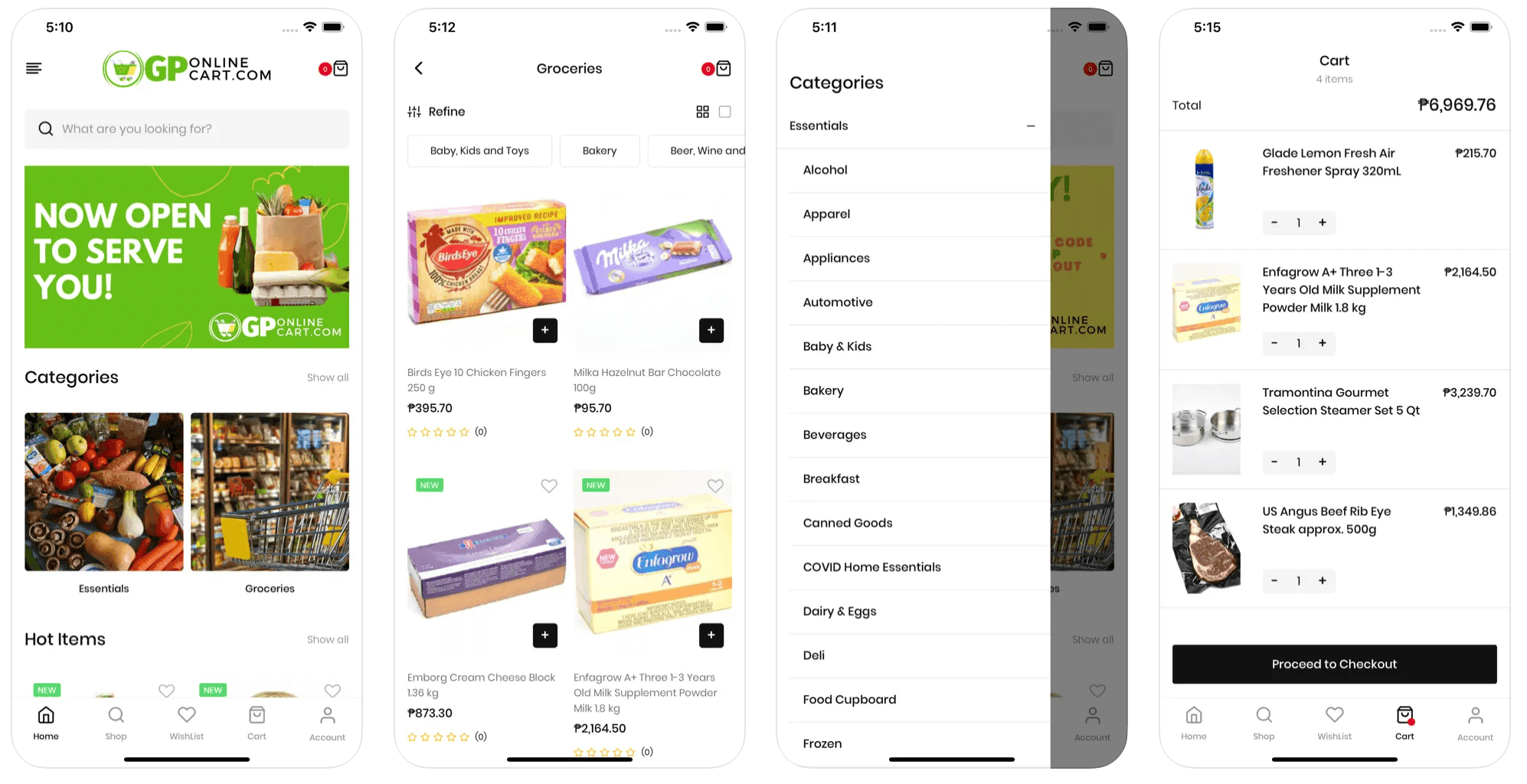
Store or branch chosen by address first, so nobody adds ₱2,400 of groceries before learning you do not deliver to their barangay. Weighed items priced by the kilo with an estimate and a final adjusted total, per-item substitution preferences set at add-to-cart, delivery slots that show as full when they are full, minimum basket rules, and a running order status the customer can watch.

02

The picker app for store staff

Built for a phone in one hand and a trolley in the other. Items sorted by aisle so the walk is short, barcode scan to confirm, weight capture for meat and produce, one-tap out-of-stock that messages the customer with your approved substitute options, and a bagging step that separates frozen, chilled and dry before handover. Every pick is timestamped so you can see which branch is slow.

03

Rider dispatch and tracking

Assign manually, auto-assign by zone, or push the booking to Lalamove or Grab when your own riders are full. Riders see batched drop-offs in route order, capture proof of delivery with a photo and name, and record cash collected. Customers get live tracking and a Viber or SMS ping when the rider is close.

04

Vendor and branch management

Every store, branch, market stall or kitchen gets its own catalogue, prices, operating hours, prep time and delivery radius. A ₱65 item in Cainta can be ₱72 in Makati without maintaining two product lists. Vendors accept or reject orders inside a cut-off timer, and an unattended order escalates to your ops team instead of expiring on the customer.

05

Payments, COD and cash reconciliation

GCash and Maya through PayMongo, cards, and cash on delivery — still the majority of orders outside the big metro chains. Prepaid orders are pre-authorised then adjusted for weight variance so you are not refunding ₱18 differences all day. COD is tracked per rider with a daily remittance sheet, because unreconciled cash is how small delivery operations quietly lose money.

06

How the platform earns: fees, commission and markup

Four honest levers. A delivery fee the customer pays, by distance or flat by zone. A service fee as a percentage of basket. A commission from the store, usually 10-25%, which only works if you drive them real volume. Or a markup on shelf price, which is what most Philippine grocery apps quietly do. We build all four and show you the margin per order so you can see which one your basket size can carry.

07

Stock, POS and catalogue sync

The fastest route to refunds is selling stock that is not there. We sync availability from your POS or inventory system on a schedule, or accept a daily spreadsheet from stores that have neither, and flag any SKU with a substitution rate high enough to mean the count is wrong.

Connects with

  • GCash and Maya via PayMongo
  • Cash on delivery with per-rider remittance sheets
  • Lalamove and Grab delivery booking as overflow
  • POS and inventory stock sync
  • SMS, Viber and Messenger order updates
  • Google Maps address capture and delivery-zone drawing
  • Printer and thermal label support for pick lists

Built for real businesses

Pricing

Grocery and delivery platforms start at ₱199,000 on the Business package

Business ₱199,000 covers the shopper site, store and picker tools, admin console, payments and delivery workflow, targeting 15 working days. A full three-app build with your own rider fleet, live tracking and batched routing is scoped separately and quoted before you commit. Pro ₱149,000 adds a branded Android app. 50% down, the balance in milestones, hosting free for year one then from ₱499/month.

See what's included

Industries using this

Questions

Answers before you ask

Ask us directly

₱199,000 on our Business package covers a working platform: shopper ordering, store and picker tools, admin, payments and delivery. Add a branded Android app at the Pro tier, ₱149,000. A full three-app build with your own rider fleet, live GPS tracking and route batching is a bigger scope and we quote it after a working session — you get the number before you spend anything.

The picker taps out-of-stock and the shopper gets an instant message with the substitute options you pre-approved for that SKU, plus refund-instead as a choice. If they set a preference at checkout, it applies automatically. Silence for the cut-off period defaults to your rule. The order total adjusts before the rider leaves, so the customer never gets a surprise at the door.

Both, and most operations run a mix. Own riders are cheaper per drop once you have density in a zone and let you batch three orders on one trip. Third-party booking covers your peaks and your thin areas without paying for idle riders. The dispatch console assigns to either, so you can start fully outsourced and bring delivery in-house as volume justifies it.

Four levers: a delivery fee, a service fee on the basket, a 10-25% commission from stores, or a markup on shelf price. Basket size decides which works. A ₱1,800 grocery basket carries a percentage; a ₱280 milk-tea order does not, and needs the delivery fee to cover the rider. We report margin per order so you can see it rather than guess.

Yes, and you should expect most orders to. COD is tracked per rider with a daily remittance sheet showing collected versus turned in, plus flags for repeat non-acceptance from the same address. Prepaid orders through GCash and Maya cut your cash handling and your no-show rate, so we usually make prepaid the default option and COD the second one.

Usually yes. We sync availability and prices on a schedule where your POS exposes an API, or take a scheduled spreadsheet export from systems that do not. If neither exists, store staff manage availability in the vendor console. We also flag SKUs with a high substitution rate, which is normally a sign the counts in your system are wrong.

The picker app sequences dry goods first and frozen last, then a bagging step separates the three temperature groups before handover. Delivery slots can be capped tighter for orders containing frozen items, and riders carrying chilled goods are prioritised in batching. It is operational discipline enforced by the app rather than a hardware promise.

Related

Want this built for your business?

We shape it around how you actually work, then launch it with training and a year of support.