
01
Category tabs
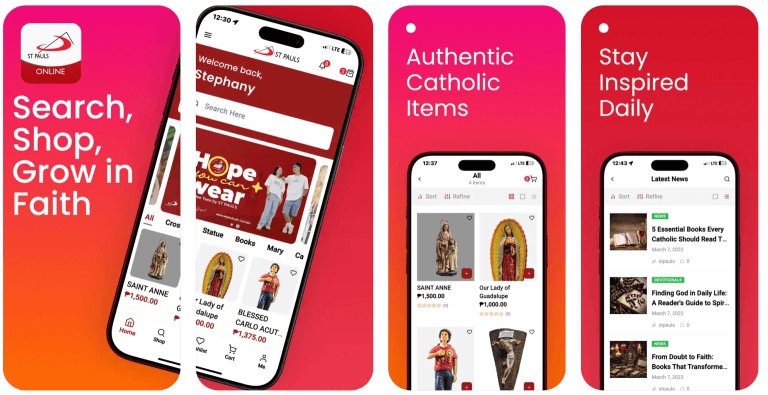
Statues, books and religious items separated at the top level, so a shopper never has to scroll past three hundred products to reach the section they came for.
Your #1 Technology Partner · Cainta, Rizal · 24/7 AI-assisted support
Retail & eCommerce
A Catholic retail catalogue online: statues, books and religious items with wishlist, cart and a news feed.
A shop selling statues, books and religious articles has a catalogue problem most retailers do not: the items are specific, the buyer often knows exactly which one they want, and the person buying is frequently nowhere near the store.
The brief
Specialty retail lives or dies on findability. A customer looking for a particular saint's statue or a specific devotional title will not browse an unstructured grid of two hundred products, and a shop with no online catalogue simply loses that sale to whoever does have one. St Pauls also had communication running in a separate place from selling — announcements on social media, products in the shop — which meant the people most likely to buy were the least likely to see what was new.
What we built
Statues, books and religious items separated at the top level, so a shopper never has to scroll past three hundred products to reach the section they came for.
A search box that finds a title or an item directly. Specialty buyers usually know the exact thing they want; the site should not make them hunt.
Visible before the click. A published price removes a message the shop would otherwise have to answer one buyer at a time.
For the pieces a customer is saving toward. It keeps the intent recorded instead of lost, and gives the buyer a reason to come back.
Standard, and deliberately so: multiple items, one order, one total, no surprises at the last screen.
The store's own announcements published on the same site as the catalogue, so the people already shopping are the people who see them.
Yes, and often better than a general retailer, because the buyer arrives knowing what they want. The work is in structure: clear categories, a search that finds an exact title, and a price on the card. Get those three right and a specialty catalogue converts without any of the discounting a mass-market store needs.
A catalogue store with categories, search, wishlist, cart, checkout and a news feed is a Pro build, live in about 10 working days once we have your product list and photos, and is quoted after a short discovery call. Unlimited products and unlimited users are included, so a growing catalogue does not change the price.
Because they record different intentions. A cart is 'I am buying this now'; a wishlist is 'I want this eventually', which in devotional and gift retail is a large share of demand. Keeping them separate means you can see what people are saving toward, which is useful information the cart alone never gives you.
Yes. Connect the store to a POS and both read from one stock record, so a statue sold over the counter stops being available online in the same moment. Without that link you end up apologising to an online buyer for something that left the shelf yesterday.
Your team. The admin panel and CMS are part of every VenderIT build, with training and documentation at handover. Adding a product, changing a price or publishing an announcement takes a few minutes and does not involve us.
Beauty & Wellness
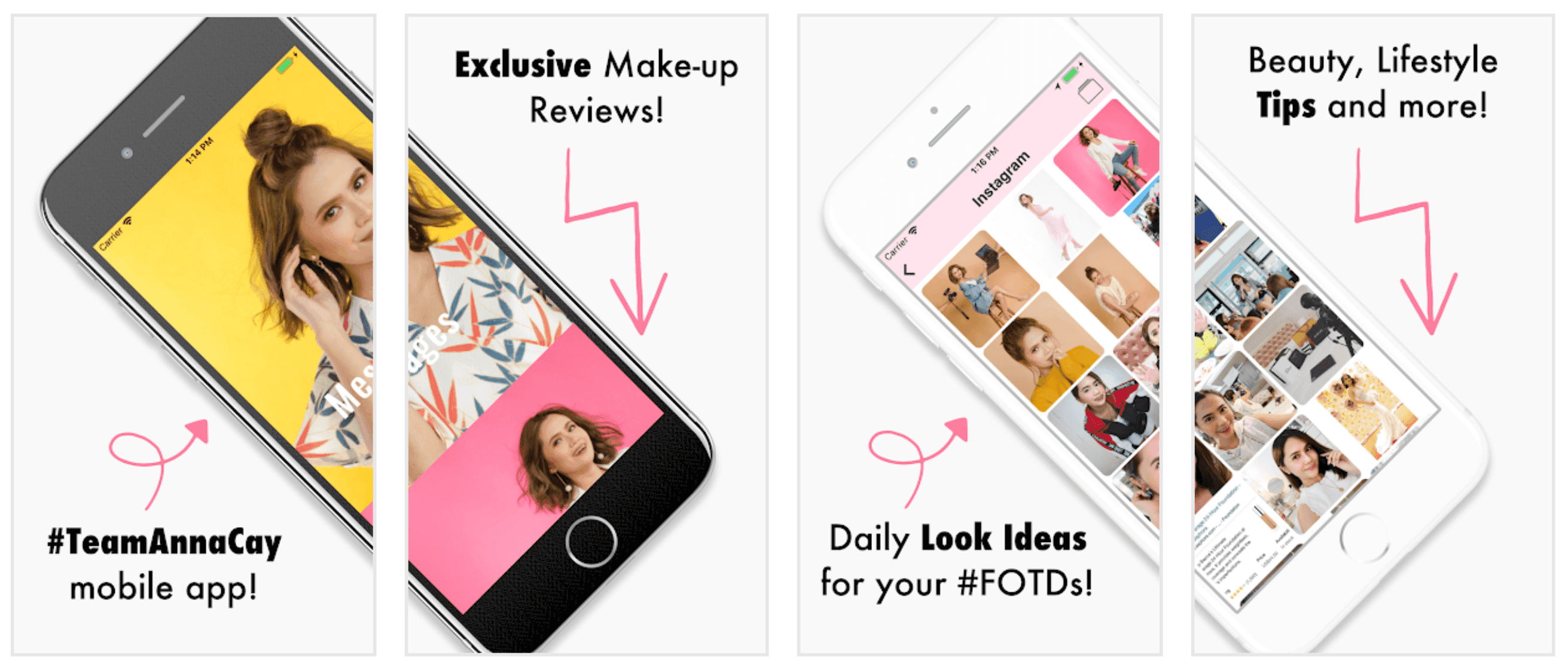
A beauty creator's own app: a make-up reviews section, a look grid and a lifestyle mosaic feed.

Automotive
A used-car marketplace where buyers browse by brand and sellers list a car in minutes.
Restaurants & Food
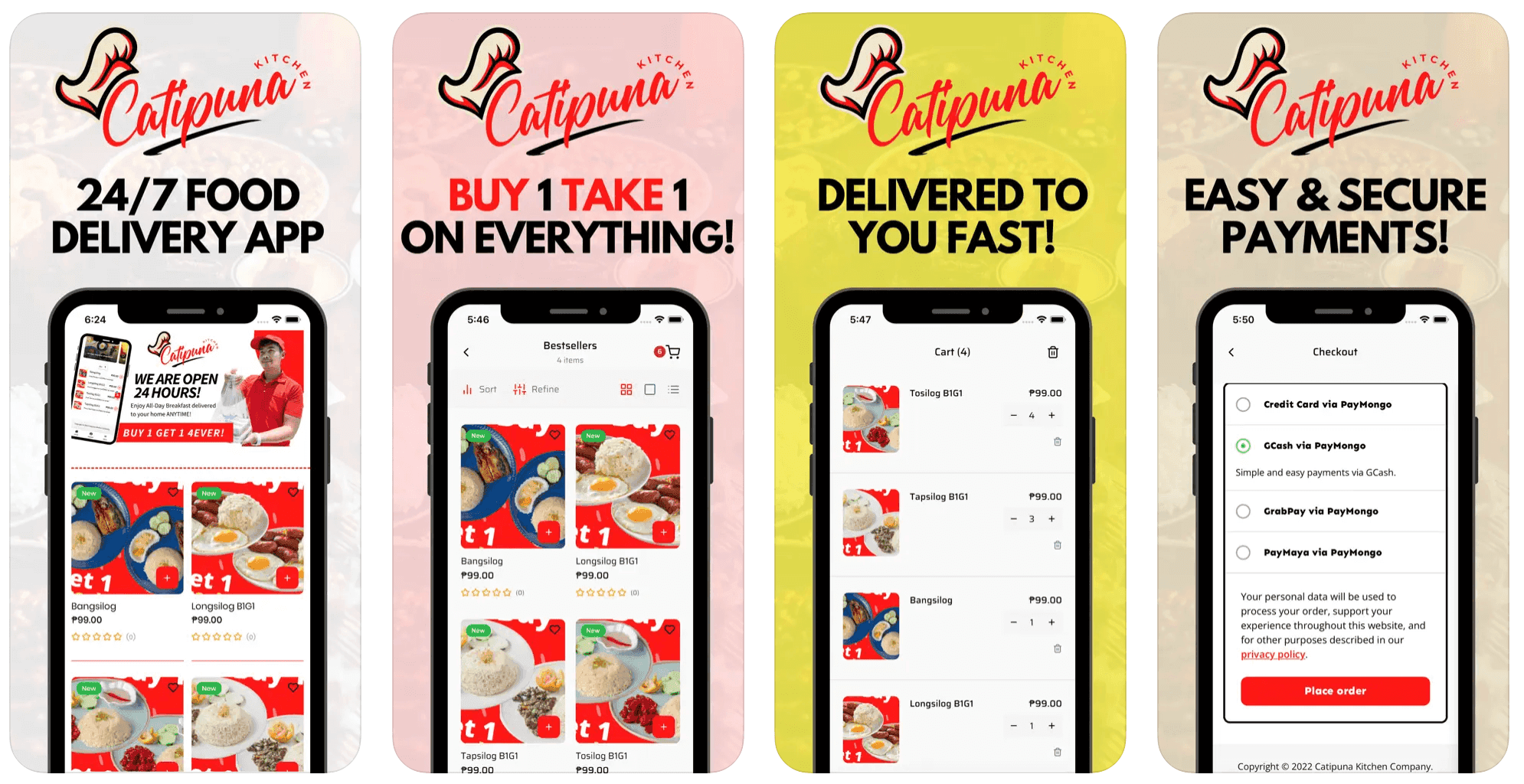
A 24/7 silog delivery app with a buy-1-take-1 menu and PayMongo checkout.
Tell us how your business works. We will come back with scope, timeline and a price — packages start at ₱99,000.