A module map with an order and a reason
Before anything is built you get a written sequence: which module goes live in which phase, what it depends on, and what it is expected to fix. Phase one is chosen for payback, not for how easy it is to demo.

Your #1 Technology Partner · Cainta, Rizal · 24/7 AI-assisted support
Build
Business Systems
Marketplace Platforms
Property & Construction
Retail, Food & Hospitality
Health, Beauty & Wellness
Professional & Education
Automotive & Logistics
Community & Startups
Custom Software & Business Systems
The module that hurts most goes live first — then the next one, once your team is genuinely using the last.
ERP system development in the Philippines has a reputation for eating a year and a budget before anyone sees a working screen. We do not run it that way.
An animated switchboard in which a Viber message, a paper walk-in form, a spreadsheet row and a supplier phone call are each routed by one switch into the Customers, Orders, Stock and Reports modules of a single business system.
Every message, form and call lands in one system instead of five group chats.
Years building systems for Philippine businesses
Build time for the first Business-package module set
Uptime on VenderIT Cloud
Source code and database, handed over at close
Before anything is built you get a written sequence: which module goes live in which phase, what it depends on, and what it is expected to fix. Phase one is chosen for payback, not for how easy it is to demo.
Purchase requests, canvass comparison, purchase orders, receiving against PO, and three-way matching before an invoice is cleared for payment. Approval limits follow your real signatories, including the director who only signs above a set amount.
Recurring billing, statements of account, ageing by customer, partial payments and collection follow-ups with an owner and a date. Credit limits block a new order before it ships instead of after the argument.
The stock module feeds finance a costed picture: moving average or FIFO as your accountant specifies, landed cost spread across a shipment, and a closing inventory figure that ties to the general ledger without a month-end reconciliation by hand. The counting and scanning mechanics live on the inventory build; here the concern is that the peso value is defensible.
Per-branch profit and loss, per-company consolidation, and drill-down from a total to the transaction that produced it. Management sees the roll-up, branch managers see only their own numbers.
Sales, purchases and payroll post through the API where one exists, and export as an importable journal where it does not. Your accountant keeps their tools and their process; the ERP stops them retyping.
We interview finance, purchasing, warehouse and operations separately, then cost the leaks: the duplicate encoding, the stock write-offs, the invoices found late. That ranking sets the phase order.
You get: A module map, phase plan and fixed phase-one scope
Chart of accounts, item master, customer and supplier master, branch structure, user roles. Getting these wrong is what makes ERP projects collapse in month six, so we agree them with your accountant first.
You get: Approved master data structure and role matrix
Phase one goes live on real transactions while your old process keeps running beside it for one full cycle. We reconcile the two at the end of the period and fix every difference before you switch off the old way.
You get: Phase-one module live, reconciled parallel period
Each later module ships on staging, gets tested against real scenarios by the people who will use it, and is signed off before the next one starts. Typically one module every two to three weeks.
You get: Signed-off modules, milestone by milestone
Cross-module reporting is switched on once the data underneath it is trustworthy. You receive the source code, the database and the documentation, plus a year of support and warranty.
You get: Consolidated reporting, source code, 1-year support
What we build with

Property & Leasing
Leasing platform handling units, tenants, contracts, recurring billing cycles and collection follow-ups.
Read the case study
Construction Supply
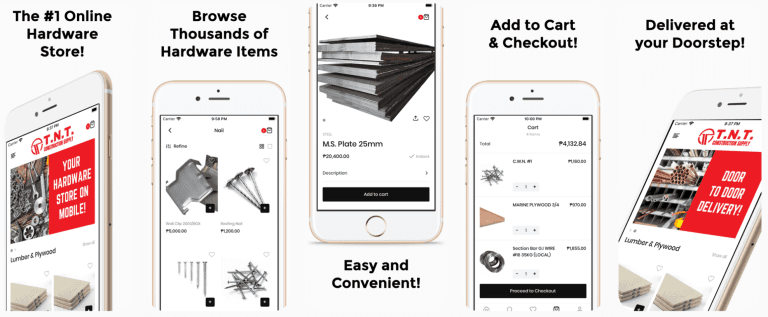
Hardware catalogue, stock status and delivery orders behind a single admin panel.
Read the case studyPricing
₱199,000 covers a full enterprise build: the master-data spine plus your first module set, delivered in 15 working days. Multi-company, multi-branch or multi-phase ERP programmes are scoped and quoted phase by phase before you commit, so you approve a number for phase two knowing exactly what phase one delivered. 50% down, the balance released against milestones. Unlimited users throughout, and hosting is free for the first year then ₱499 a month.
Questions
Something not covered? Message us — a real person from the team replies, usually the same day.
Ask us directlyOur Business package is ₱199,000 and covers the master-data spine plus a first module set in 15 working days. Larger programmes are quoted phase by phase, so you approve each phase against what the previous one actually delivered. Cost tracks the number of modules, branches, approval layers and outside systems we connect — not the number of screens. Unlimited users at every tier.
No, and we usually advise against it. Your bookkeeper knows their tool and your auditor expects it. The ERP handles operations — purchasing, receiving, stock, billing, approvals — and posts summarised entries into QuickBooks or Xero through the API, or exports an importable journal where no API exists. You lose the double encoding without losing your accounting system.
Whichever one is costing you the most right now. For distributors it is usually purchasing and inventory, because that is where the write-offs are. For service firms it is billing and receivables, because that is where the cash is late. We rank the options by cost of the leak during the audit, then you choose from a ranked list rather than a feature menu.
Phase one is 15 working days from the point your master data and approvals are ready. Each later module usually runs two to three weeks. A four-module rollout lands around three to four months in practice, and the delays are almost always data and approvals on your side, so we agree those dates in writing at the start.
We migrate opening balances, master data and the history you actually need to query — normally the current fiscal year plus one. Older archives are loaded read-only rather than forced into the new structure, which is cheaper and safer. We show you a sample migration on staging and you sign off the numbers before anything goes live.
Yes. Each company keeps its own books, numbering and tax profile, while management gets a consolidated view across all of them. Inter-company transfers and charges are recorded on both sides. Branch managers see only their branch; the roll-up is a permission, not a separate report someone assembles by hand each month.
You own the source code and the database, so the ERP grows with you or moves with you. Adding a module later is a scoped change, not a new project, because the master-data spine is already built. We keep supporting and extending systems we shipped years ago — that is what the 20+ years and 2,000+ businesses on VenderIT Cloud actually represent.
Tell us how your business works. We'll come back with a clear recommendation, a timeline and a price — no obligation.